Advent · Advent 2, Saturday · 12 December

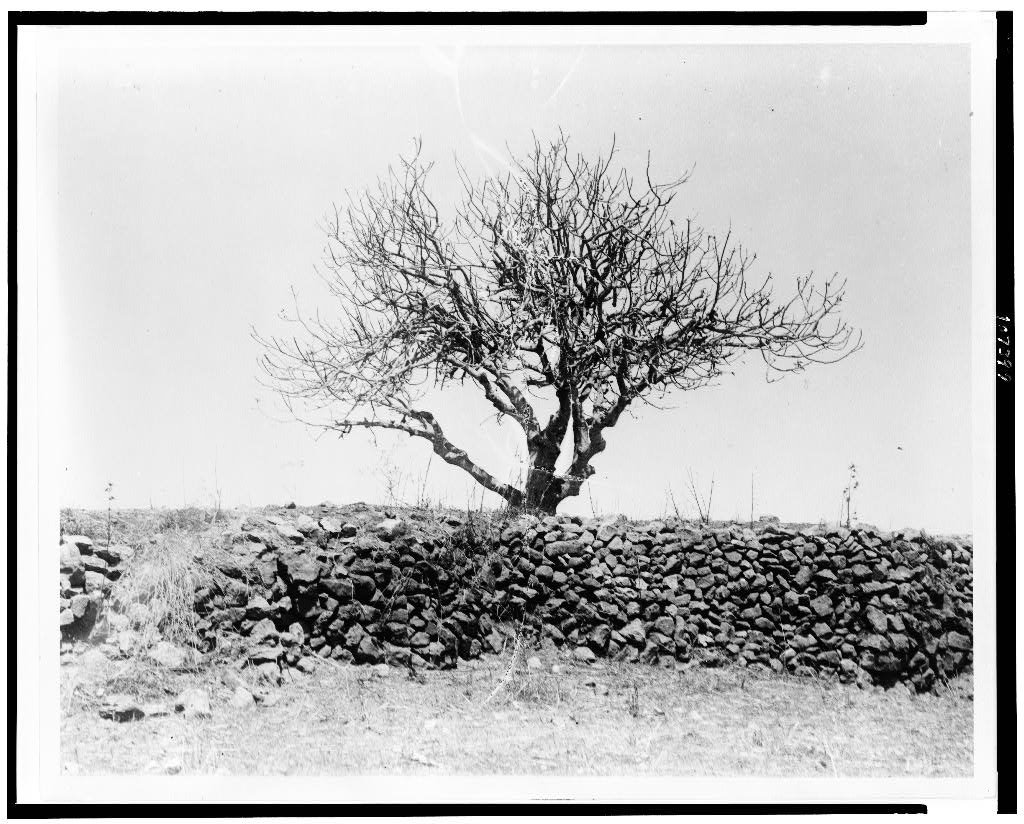
'Fig tree after devastation by locusts', Palestine, 1915 (black and white)
'Fig tree after devastation by locusts', Palestine, 1915 (black and white). Library of Congress.
17Though the fig will not bud, and there is no yield in the vines; the deed of the olive has denied, and the terraces have not made food; the flock has been sundered from the pen, and there is no herd in the byres; 18and I—in ADONAI I will be jubilant; I will exult in the Elohim of my rescue.

Habakkuk 3:17-18 · Wroot Press Bible v0.36.0

Read the whole passage, Habakkuk 3:13-19

What have you done for me lately?

Many human relationships and organizations fall into one of two patterns: a retrospective “What have you done for me lately?” or a prospective quid pro quo. Some sort of exchange is their basis.

For some of us, this is a contract for work: I will do these tasks, and you will compensate me for them. For others, it goes unspoken, as in our friendships, where we expect to show up for each other. We don’t say that’s why we’re friends, but if nobody ever shows up, it’s hard to stay friends.

I say this mostly tongue in cheek, but I want to point out an undercurrent that sometimes runs through our relationship with God: both the quid pro quo and the “What have you done for me lately?”

When things are not going well, we may feel distant from God and fall into the temptation to think, “Well, if God’s not going to do anything for me, why am I believing?” Or, looking ahead, we may ask, “Why would I spend my time serving and giving? What am I going to get out of it?”

One of the most consistent themes throughout Scripture is the disobedience of the people and the faithfulness of God. The faithful God does not look down at us and ask, “What have you done for me lately?” Nor does God look ahead in our lives and think, “I will give them this, so they will do that.” God is not a deal maker or a negotiator, but the one in whom we live and move and have our being. Our existence and our life in this world are a gift.

There is a tendency in us toward self-destruction: toward pride, anger, jealousy. There is disease, and death itself. In Advent we anticipate and hope for the coming of the one who defeats death, the one who wipes the tears from our eyes. The one who comes not according to our schedule, but according to the needs of the world, in God’s good time for the universe: the right time, the kairos.

So even if, as Habakkuk says, the fig tree doesn’t flourish, the fields yield no food, and the flocks are cut off from the fold, our joy is in the Lord. Our joy is not in the things we get, but in the God who gets us: who sees us and loves us, strengthens us and sends us, protects us and upholds us.

In this season of Advent, may we hold closely to the coming of Jesus, not for what we could get out of it, but to meet the one who comes to us and gives us life.

How is it with your soul?

John Wesley's old question. Pick the word closest to how you are. There's no wrong answer, and you can skip it.

Other ways in

Read slowly (lectio divina)Four times over, listening for one word

Read

Read the verses slowly, out loud if you can. Listen for a word or phrase that catches you.

17Though the fig will not bud, and there is no yield in the vines; the deed of the olive has denied, and the terraces have not made food; the flock has been sundered from the pen, and there is no herd in the byres; 18and I—in ADONAI I will be jubilant; I will exult in the Elohim of my rescue.
Habakkuk 3:17-18

Reflect

Read them again. Stay with the word that caught you. What is it touching in you today?

17Though the fig will not bud, and there is no yield in the vines; the deed of the olive has denied, and the terraces have not made food; the flock has been sundered from the pen, and there is no herd in the byres; 18and I—in ADONAI I will be jubilant; I will exult in the Elohim of my rescue.
Habakkuk 3:17-18

Respond

Say something back to God about it, in your own words. A sentence is enough.

Rest

Then stop talking. Sit for a minute in the quiet and let God have the last word.

Be still (silence)Read once, then sit quietly

Read the verses once. Then set them down.

17Though the fig will not bud, and there is no yield in the vines; the deed of the olive has denied, and the terraces have not made food; the flock has been sundered from the pen, and there is no herd in the byres; 18and I—in ADONAI I will be jubilant; I will exult in the Elohim of my rescue.
Habakkuk 3:17-18

Be still. You don't need to think about anything. When your mind wanders, and it will, come back to one word from the verses.

You don't have to read anything more today. Be still. When your mind wanders, and it will, come back to your breathing.

When the time is up, say:

Come, Lord Jesus.

Breathe a prayer (breath prayer)One short phrase to carry through the day

Breathe in slowly and pray the first half. Breathe out and pray the second.

In Come, Lord Jesus,

Out here I am.

Pray it ten times, or until you are quiet. Then take it with you. Pray it again at a red light, in a line, before you answer the phone.

Look back over the day (examen)With today's verses beside you

Read the verses.

17Though the fig will not bud, and there is no yield in the vines; the deed of the olive has denied, and the terraces have not made food; the flock has been sundered from the pen, and there is no herd in the byres; 18and I—in ADONAI I will be jubilant; I will exult in the Elohim of my rescue.
Habakkuk 3:17-18

Look back over the last day, hour by hour. Where did these verses meet you? Where were you awake to God?

Where did you miss it? Don't argue with yourself. Just notice.

Give thanks for one thing. Ask forgiveness for one thing. Ask help for one thing tomorrow.

Then say:

Come, Lord Jesus.

A psalmPray someone else's words today

Read the psalm slowly, as your own prayer. Where it says what you can't, let it say it for you.

Then say:

Come, Lord Jesus.

The other readingsToday's full lectionary passages

Today's verses come from a longer passage, and the lectionary sets other readings beside it. Read them for the wider view, then come back and pray the verses with lectio.

Read today's passages

Today's practiceSomething to do instead of reading

No more reading today. Draw a practice and do it. That is your prayer.

Go to today's practice

Make room

One more thing to carry into the day, if you like.