Not the endpoint
Whenever we receive blessings, where do they stop? If they stop with us, they aren’t really a blessing.
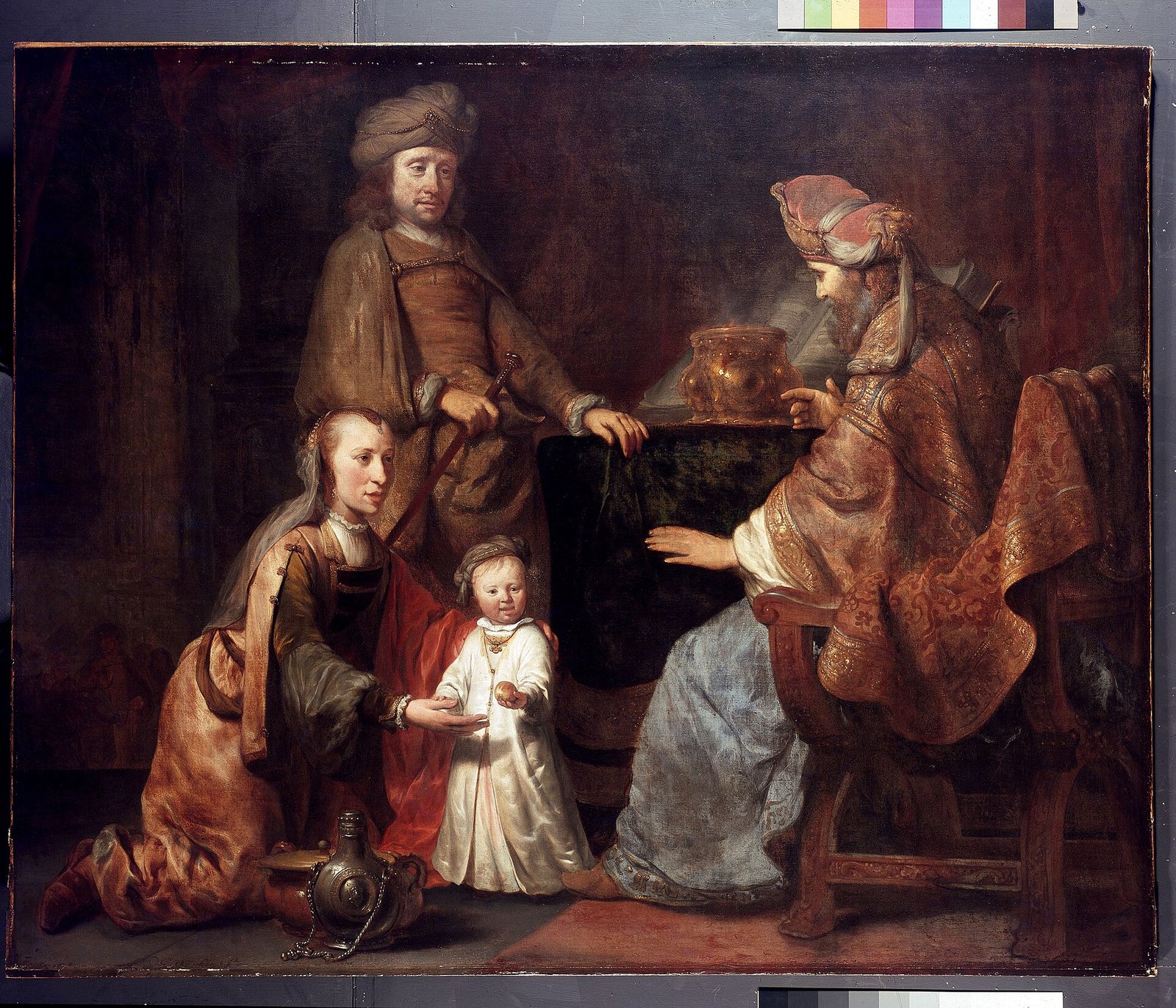
Hannah shows this quite clearly. She prays for a child, praying to God. She has been barren all her life, and then she bears a child. But her joy is not complete in having the child at home. As soon as she can, she gives him directly to God. She receives the blessing and then passes it on to others.
For so many of us, myself included, Christmas gifts have an endpoint in the recipient. I give my father a book. I give my mother a sweater. And so on. The difference between these Christmas gifts and the gifts of God is that the gifts of God are a flowing river. They flow through us, not to us. We are not the endpoint.
When we try to be the endpoint of blessings and mercies, things get out of hand. Later in 1 Samuel, Saul is blessed and anointed to be the first king of Israel. But at a certain point he misses the goal. He forgets that his purpose as king is to be a vessel, for God and for the people, and he sees himself as an endpoint. The grace goes only so far.
The season of Advent is a time to reflect on the blessings we have received in our lives, but also to look critically at where we have turned them into endpoints, where we have stopped passing those blessings on to others.
We are planted by the river of life to bear fruit for others. One apple tree, once it reaches fruit-bearing age, can bear hundreds of apples a year. Or it can be ignored, underwatered and undernourished, and its fruit dries up.
In this season of Advent, may you reflect on how you receive the gifts of God, and how you are also called to share them: the same gifts you receive, the same blessings. That joy, that peace, that mercy are offered not just for you as an endpoint, but to be shared, to be given for others.